
Taxila Stone
Taxila Stone is a Dallas–Fort Worth–based distributor of engineered and natural stone surfaces, supplying granite, marble, quartz, and other slab materials for residential and commercial projects. Built as a one-stop resource for designers, builders, and homeowners, the brand supports material discovery through a showroom-led experience and a growing ecosystem of collections and partner lines.

Client
Taxila Stone
Category
Stone & Surfaces Showroom / Distributor
Type of Work
-
Website Strategy + Build
-
Product Architecture
-
SEO Foundation
-
Content System (Social + Email)
-
Launch Support (Showroom / Campaign)
Brief
A clearer digital ecosystem that made a growing inventory easier to browse, easier to rank, and easier to inquire from.
Website + product architecture + SEO foundation + marketing infrastructure + showroom launch support.
ROLE: Led strategy and execution across website structure, UX direction, SEO foundation, and marketing systems.
CONSTRAINTS: We mapped how people actually search and specify stone.
As Taxila expanded its collections and partner collaborations, the company required a:
Modern digital presence that could more effectively showcase its stone inventory, partner brands, and showroom experience.
The Challenge
Taxila Stone was expanding its partnerships and inventory while wanting to focus more on offline events. And that’s why they needed a complete revamp of their website - to support their growing ecosystem.
In the discovery phase to understand the scope of work, key challenges came to light.
1. Weak Brand Strategy
2. Inventory Growth
3. Partner Brands
4. Offline events / Showroom push
The need: A more structured digital platform to organise Taxila Stone’s growing product ecosystem, strengthen brand clarity, and support ongoing marketing initiatives.
The Opportunity
The project created an opportunity to structure Taxila Stone’s growing digital presence by:
1. Organizing the growing stone inventory into clear, browsable collections
2. Defining a structured hierarchy for partner brands and collaborations
3. Strengthening SEO foundations to improve online discoverability
4. Creating a cohesive digital platform connecting products and brands
The direction: To build a structured digital ecosystem that supports product discovery, brand partnerships, marketing, and showroom engagement.
The Strategy
The strategy focused on three core pillars.
1. Structure (collections, brands, navigation)
2. Experience (UX, page system, content consistency)
3. Demand Support (SEO + email + social + campaigns + launch)
The goal: Develop a scalable digital foundation to support product growth, partnerships, and marketing initiatives.
The Execution
The work was implemented in three phases:
-
Platform structuring
-
Experience design
-
Marketing enablement
Phase 1: Platform Strategy & Structural Foundation
Digital Platform Strategy
First step: Coming up with a cohesive digital platform strategy.
As Taxila Stone expanded its inventories and partnerships with international kitchen and surface brands, it needed strong support for product discovery and brand storytelling.
We mapped how people actually search and specify stone., The process included understanding how designers, architects, homeowners, and contractors search for stone materials. This made it clear on how to structure the website, matching it to the discovery patterns.
The main aspects that the strategy focused on bringing all aspects into a single ecosystem, which included:
-
Product collections
-
Partner brands
-
Marketing channels
Outcome: Created a holistic digital ecosystem connecting product catalogs, partner brands, and marketing channels to support exploration and engagement.
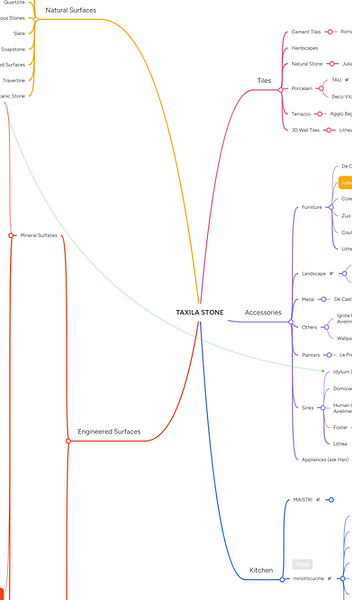
Information Architecture & Platform Structuring
Next step: Bringing the website structure to life.
A structured information architecture was developed to define how collections, categories, and partner brands should be organized on the website.
The vision was to revamp the website in a manner that could scale with new materials and new brand collaborations. Navigation pathways were developed to simplify browsing across all product collections.
Outcome: The new architecture improved navigation clarity, strengthened SEO foundations, and created a scalable framework for future platform growth.
Content Audit & Digital Asset Organization
Carried out a detailed content audit to ensure inventory pages were accurate, consistent, and complete.
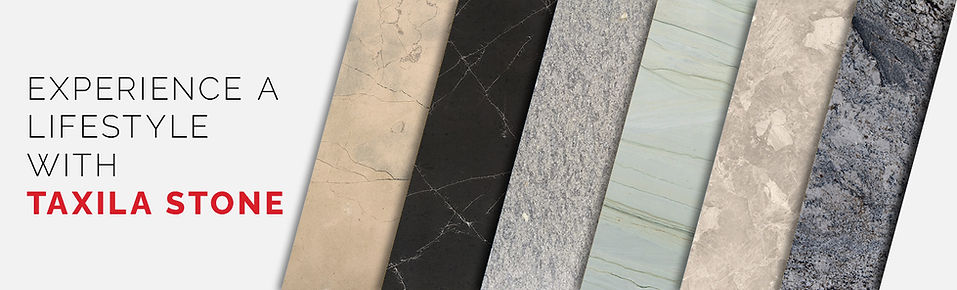
Audited all product visuals, descriptions, and slab photos; and reorganized them to integrate seamlessly into the new digital framework.
In this step, standardized all aspects to ensure website consistency.
Outcome: The content audit streamlined asset management and ensured all materials could be integrated efficiently into the new platform structure.
Phase 2: Product & Brand Experience
Product Catalog Structuring for Stone Collections
Building on the platform architecture, phase two’s first step was to optimize the product catalog.
The product catalog was completely revamped. Clear product categories were created, including quartz surfaces, kitchen countertops, and engineered stone materials.
The product imagery, description, and categories were completely changed.
Outcome: Improved product categorization strengthened material discovery and supported SEO improvements that contributed to Domain Authority increasing from 10 to 30.
UX Strategy & Website Redesign
The website had an outdated interface with difficult navigation.
The revamp focused on designing a modern, minimalist website that ensures an intuitive digital experience that showcases the premium quality of the materials Taxila Stone offers.
The design included:
-
A lighter visual system
-
Improved navigation pathways
-
Grid-based layouts
-
Modern typography
-
Refined layout systems
Outcome: The redesigned website delivered a faster, more intuitive user experience that better showcases the brand’s collections and supports product discovery.


Brand Architecture & Partner Brand Integration
A design strategy was needed to represent brand collaborations and incorporate them into Taxila Stone’s website.
Integrated global partner brand pages like minotticucine and MAISTRI within Taxila Stone’s ecosystem, ensuring each collaboration was presented clearly without diluting the showroom brand.
Disclaimer: Work delivered as part of Taxila Stone’s showroom ecosystem.
Outcome: The brand hierarchy improved platform clarity, strengthened partner brand positioning, and made related product collections easier to discover.

Phase 3: Marketing Infrastructure & Customer Engagement
SEO Optimization & Site Architecture
With a complete content and website audit, the SEO foundation was set.
We improved URLs, internal linking, page hierarchy, and metadata so search engines could understand collections and brand relationships.
Lastly, metadata and page categorization were refined to ensure search engines could clearly interpret relationships between product collections, partner brands, and content pages.
Outcome: Following the restructure and on-page SEO cleanup, it helped improve the Google Rankings. Multiple pages reached page 1-2 for targeted keywords.

Social Media Strategy & Targeted Campaigns
A complete social media strategy was created, focusing strongly on visual, engaging content that resonate with architects, designers, contractors, and homeowners.
Uploading high-quality and engaging content on Pinterest made a big impact.
From creating a social media calendar to scheduling posts to launching targeted campaigns, the main focus was on audiences in the Dallas-Fort Worth region to increase brand awareness and drive traffic to the website.
In turn, on Instagram, for example, reach increased significantly.
Outcome: The strategy helped grow the brand’s audience to 212%+ followers on Instagram and generated showroom inquiries through targeted campaigns.


Email Marketing Infrastructure
Managed all email marketing campaigns to increase brand awareness and capture potential leads. Integrated email marketing tool, Mailchimp, to support ongoing communication with customers and design professionals.
Newsletter sign-up forms and campaign templates were introduced to capture leads and maintain engagement with visitors interested in stone collections and showroom updates.
This infrastructure allowed Taxila Stone to regularly share product launches, collection updates, and showroom announcements with their audience.
Outcome: Email campaigns achieved approximately 25% open rates, enabling consistent engagement with customers and design partners.
Digital-to-Showroom Engagement Strategy
With an increase in reach, the brand expanded and needed assistance in a showroom launch.
Executed targeted email campaigns to generate leads, targeting architects, designers, contractors, and homeowners. The project included managing the event completely, including designing print materials, implementing signage, and promotional assets for the event.
The event showcased premium stone collections and partner brand collaborations, combining curated installations with a visually cohesive environment that reflected Taxila Stone’s craftsmanship and luxury positioning.
Outcome: A highly successful event. The launch saw a large number of qualified attendees, generating strong leads and strengthening the connection between the brand’s digital presence and its physical space.

Conclusion
This project gave Taxila Stone a clearer brand ecosystem and a digital experience built for scale. Product discovery became simpler, the site built trust before the showroom visit, and the marketing system made it easier to stay consistent across channels. It also created a stronger foundation for presenting and supporting partner brands carried by the showroom, including Minotticucine and MAISTRI, without diluting the Taxila Stone brand.


